
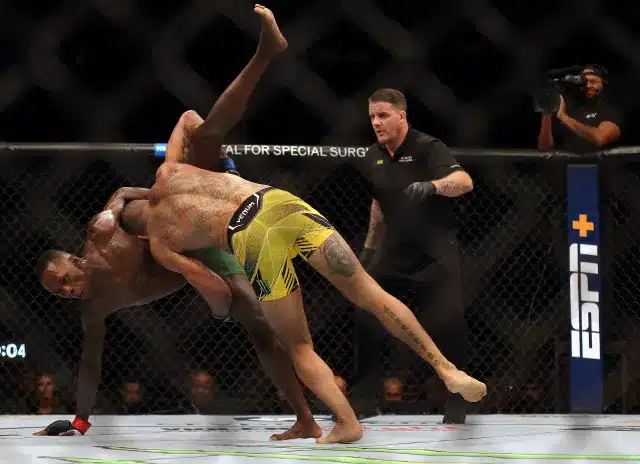
Ever watched a UFC fight and wondered what the referee is actually checking during those pre-fight pat-downs? You’re not alone! While most fans focus on the fighters squaring off, there’s a whole safety and fairness protocol happening right in front of everyone’s eyes. Understanding what referees look for during UFC stoppages and pre-fight checks gives you a deeper appreciation of the sport and the critical role officials play in keeping everything above board.
The truth is, referees have multiple responsibilities that go way beyond just watching for taps and knockouts. They’re essentially the guardians of fair play and fighter safety, conducting detailed inspections before fights even begin. These checks aren’t just formalities, they’re essential safeguards that can make or break a fighter’s performance and protect everyone involved.
Let’s dive into the real world of UFC officiating and discover exactly what these eagle-eyed refs are looking for when they’re doing their job.
What Safety Equipment Do Referees Verify Before Each Fight
Before any punches are thrown, referees conduct a comprehensive equipment check that’s like a pre-flight safety inspection. This isn’t some quick once-over either, it’s a systematic process that ensures every piece of mandatory gear is properly in place and functioning correctly.
Why Mouthguards and Protective Gear Matter So Much
The referee will always check that fighters have their mouthguards properly fitted and ready to go. A loose or improperly fitted mouthguard can become a serious hazard during the fight, potentially causing choking or dental injuries, though the evidence on specific mouthguard protocols in MMA is still emerging. The same goes for protective cups, which must be properly positioned and secured.
- Mouthguards must be properly molded and secure
- Protective cups need to be correctly positioned
- Glove taping must be inspected and approved by athletic commission officials
- Hand wraps underneath gloves are checked for proper application
What many people don’t realize is that glove inspections go beyond just making sure they’re on correctly. The referee checks that the glove tape has been signed off by commission officials, ensuring no unauthorized modifications have been made. Athletic commission regulations require that hand wraps and bandages be applied in the presence of commission inspectors, with explicit approval needed before gloves go on. This prevents fighters from adding extra padding or making other alterations that could provide an unfair advantage.
How Do Officials Check For Illegal Substances And Cheating
Here’s where things get really interesting, and honestly, a bit sneaky. One of the most important parts of the pre-fight inspection involves checking for any substances that could give a fighter an unfair slippery advantage during the bout. Research shows that even small amounts of petroleum jelly or oil can significantly impact grappling exchanges and submission attempts.
What Grease and Oil Applications Look Like in Practice
Referees carefully examine fighters’ skin, paying special attention to areas like behind the ears, under the arms, and around the shoulders and back. Even a small amount of petroleum jelly or oil in these spots can make it incredibly difficult for an opponent to maintain grips during grappling exchanges.
This type of cheating might seem minor, but it can completely change the dynamic of a fight. Imagine trying to secure a submission hold on someone who’s essentially been made slippery in key areas. It’s like trying to grab a greased-up watermelon!
| Body Area | Why It’s Checked | Potential Impact |
|---|---|---|
| Behind ears | Common hiding spot for grease | Prevents headlock submissions |
| Under arms | Affects grappling control | Makes clinch work ineffective |
| Shoulders and back | Large surface area concern | Impacts takedown defense |
| Chest and torso | Core grappling zone | Affects ground control positions |
A fair fight starts with a level playing field, and that means making sure nobody's trying to slip their way out of trouble before the action even begins.
What Foreign Objects and Dangerous Items Are Referees Watching For
You might think it’s obvious that fighters can’t bring weapons into the octagon, but the reality is more nuanced than you’d expect. Referees are trained to spot all sorts of potential hazards that could turn a competitive fight into a dangerous situation.
Why Even Small Objects Can Become Major Problems
The inspection includes checking for anything that could be used as a weapon or cause unexpected injuries. This means looking for items like toothpicks, small pieces of metal, or even improperly trimmed fingernails and toenails that could act like claws during the fight.
- Toothpicks or small wooden objects that could puncture skin
- Metal items hidden in clothing or gear
- Excessively long or sharp fingernails and toenails
- Jewelry that wasn’t properly removed
- Any hard objects concealed on the body
There have been documented cases where fighters have had to have their toenails clipped right there on the spot because they were deemed too long and potentially dangerous. Industry standards specifically recommend that commission inspectors check and trim fighters’ fingernail length using clippers and files at events to ensure safety. When you’re throwing kicks and scrambling on the ground, even something as simple as an overgrown toenail can cause nasty cuts and injuries.
How Nail Inspections Work During Fight Preparations
Both fingernails and toenails get scrutinized during the pre-fight check. Referees are looking for anything that extends beyond the fingertip or toe in a way that could cause cuts or gouging during grappling exchanges or striking sequences. Ohio MMA regulations explicitly require that finger and toe nails must be trimmed, with inspectors determining compliance.
When Do Referees Actually Decide To Stop A Fight During Combat
Now we get to the heart of the matter, the actual fight stoppage decisions that can make or break careers and create legendary moments or controversial debates. This is where referee expertise really shines, and where the difference between good and great officiating becomes crystal clear.
What Signs Indicate A Fighter Can No Longer Continue Safely
Referees are constantly evaluating multiple factors simultaneously during active combat. They’re watching for loss of consciousness, inability to intelligently defend, and signs that a fighter is taking unnecessary damage without being able to effectively respond or recover. Official UFC guidelines clearly state that referees must stop fights when fighters become unresponsive, unconscious, or unable to mount an intelligent defense.
The key concept here is “intelligent defense.” A fighter might be getting hit, but if they’re moving, blocking, countering, or working to improve their position, the fight continues. MMA scoring criteria indicate that demonstrations of movement, blocking, or positional improvement signal effective defense, allowing the fight to continue. However, once that intelligent defense disappears, the referee needs to step in quickly.
- Fighter becomes unresponsive or unconscious
- Complete loss of defensive movement or awareness
- Fighter stops fighting back despite taking continued damage
- Obvious serious injury that compromises safety
- Fighter verbally submits or taps out
How Timing Affects Controversial Early and Late Stoppages
The timing of referee interventions often sparks heated debates among fans and fighters. Early stoppages happen when refs jump in too quickly, potentially robbing fighters of comeback opportunities. Late stoppages occur when officials wait too long, allowing unnecessary damage to accumulate. UFC referee Mark Smith describes this challenge as avoiding stopping a fight “one punch too early” versus “one punch too late,” aiming to stop fights “right on time.”
Finding that perfect balance requires split-second decision-making under intense pressure. Referees have to consider the fighter’s past performances, current condition, and immediate safety all within a matter of seconds.
What Factors Influence Referee Decision Making Under Pressure
Being a UFC referee isn’t just about knowing the rules, it’s about making life-changing decisions in real-time while thousands of people are screaming and millions more are watching at home. The pressure is absolutely immense, and understanding what influences these decisions helps explain why sometimes things don’t go the way fans expect.
How Experience Shapes Split-Second Judgment Calls
Experienced referees develop an intuitive sense for reading fighters and situations that goes beyond just following a checklist. They can often sense when a fighter is in real trouble before it becomes obvious to casual observers, though this ability comes with the acknowledgment that referee decisions are inherently subjective and not an exact science. Industry experts note that referees must assess subtle cues like body language, response time, and awareness to intervene before obvious harm occurs.
| Decision Factor | Immediate Consideration | Long-term Impact |
|---|---|---|
| Fighter responsiveness | Can they defend intelligently right now | Prevents serious brain injury |
| Damage accumulation | How much punishment has been absorbed | Protects long-term fighter health |
| Fight momentum | Is the situation likely to improve | Maintains competitive integrity |
| Round timing | How much time remains | Affects comeback possibilities |
The reality is that some referee decisions will always be controversial because people see things differently, especially when emotions and money are on the line. What looks like an early stoppage to one person might seem perfectly timed to another, and that’s just the nature of the sport.
Why Consistency Across Different Officials Matters
One of the biggest challenges in MMA officiating is maintaining consistency between different referees and different fights. What one official considers sufficient damage for a stoppage might not meet another official’s threshold, and this inconsistency can create frustration among fighters and fans alike. MMA community discussions frequently highlight referee discretion in stoppage decisions, with varying criteria leading to ongoing debates over early or premature stoppages.
What The Research Shows About MMA Officiating
Understanding the science behind MMA officiating helps us appreciate the complexity of referee decision-making and fighter safety protocols. Here’s what the evidence tells us about how these critical decisions are made:
- Safety equipment protocols are well-established: Athletic commissions have clear guidelines for pre-fight inspections, including specific requirements for glove taping approval and nail trimming procedures
- Intelligent defense criteria are clearly defined: Referees are trained to recognize when fighters can no longer mount effective defensive responses, with movement and positional improvement being key indicators
- Split-second decisions require multiple assessments: Factors like fighter responsiveness, damage accumulation, and round timing all influence referee choices in real-time situations
- Consistency remains challenging: Despite unified rules, referee discretion in stoppage decisions varies, leading to ongoing debates about optimal timing and criteria
- Experience matters but isn’t foolproof: While seasoned referees develop better instincts for detecting fighter compromise, decisions remain subjective and prone to scrutiny
How Training and Preparation Help You Understand Fight Officiating Better
If you really want to appreciate what UFC referees go through and how fight stoppages work, there’s no substitute for getting some hands-on experience with martial arts training yourself. When you’ve been in positions where you’re taking shots and feeling pressure, you develop a much deeper understanding of what fighters experience during those crucial moments.
Training in different martial arts disciplines gives you insight into the various ways a fight can end and how quickly situations can change. Whether it’s feeling the pressure of a tight submission hold, experiencing the disorientation of getting rocked by strikes, or understanding the exhaustion that sets in during intense grappling, firsthand experience makes you a more informed viewer.
At Extreme MMA, we work with students at all levels to develop not just physical skills, but also the mental awareness and understanding that makes you appreciate the technical and strategic aspects of professional fighting. Our comprehensive programs cover everything from Brazilian Jiu-Jitsu and Muay Thai to Wrestling and Strength & Conditioning, giving you a well-rounded perspective on what fighters go through in the octagon.
Understanding officiating also helps you become a better training partner and competitor yourself. When you know what referees are looking for in terms of intelligent defense and fighter safety, you can better protect yourself and others during sparring sessions and competitions.
[extreme_mma_classes_cta title=”Experience MMA Training” description=”Join our comprehensive programs and develop the skills and understanding that make you appreciate every aspect of mixed martial arts competition.” cta_text=”Start Your Free Trial”]
What This Means For Your Understanding of UFC Competition
Now that you know what’s really happening during those pre-fight checks and fight stoppages, you can watch UFC events with a much more informed perspective. Instead of just seeing random pat-downs and referee interventions, you’ll understand the systematic safety protocols and split-second decision-making that goes into every aspect of professional MMA competition.
Remember that referees are ultimately there to protect the fighters while maintaining the integrity of the sport. Their job requires balancing fighter safety with competitive fairness, often under intense pressure and scrutiny. The next time you see a controversial stoppage, try to consider all the factors the referee had to weigh in that moment.
Whether you’re a casual fan or someone considering getting involved in martial arts training yourself, understanding these behind-the-scenes aspects of UFC competition enhances your appreciation for the skill, preparation, and safety measures that make professional MMA possible. The sport has come a long way in terms of safety and officiating standards, and that evolution continues to make it better for everyone involved.
About the Author

Lachlan James
Marketing Coordinator at Extreme MMA
Lachlan James is the Marketing Coordinator at Extreme MMA, responsible for creating engaging content and building the brand’s online presence. With a passion for mixed martial arts and digital marketing, Lachlan combines his knowledge of the sport with strategic marketing expertise to help grow the Extreme MMA community. He works closely with coaches and fighters to share their stories and expertise with both current members and aspiring martial artists.
When he’s not creating content or managing social media campaigns, Lachlan can be found training at the gym, always looking to improve his own skills while gaining deeper insights into what makes Extreme MMA special.
When he's not creating content or managing social media campaigns, Lachlan can be found training at the gym, always looking to improve his own skills while gaining deeper insights into what makes Extreme MMA special.