
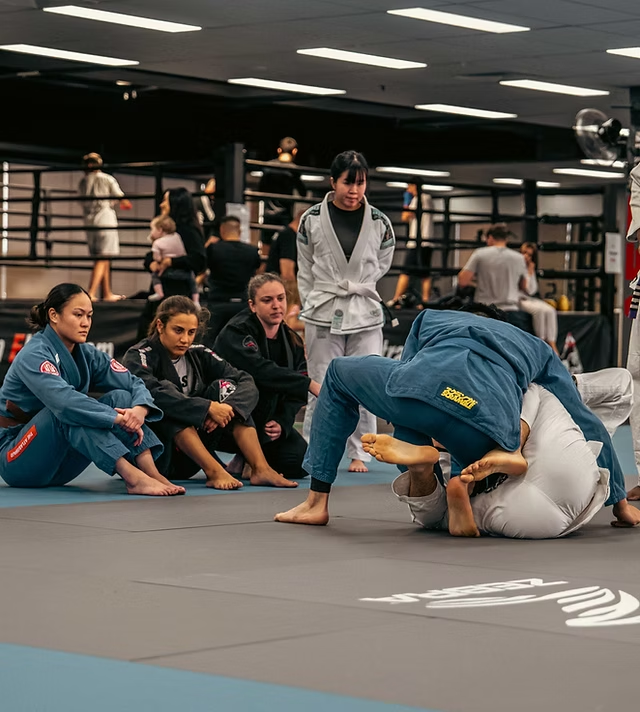
The BJJ Australian Open 2026 delivered some incredible matches and, more importantly, highlighted crucial defensive strategies that every Melbourne competitor should be studying. Whether you caught the action live or watched the highlights, there were clear patterns in how the top performers handled compromising positions and defensive scenarios.
For those training BJJ in Melbourne, these tournament insights offer a roadmap for improving your defensive game. The competition showcased both traditional and modern approaches to escaping difficult positions, with particular emphasis on turtle positioning, guard recovery, and timing your defensive movements correctly.
Let’s break down what worked, what didn’t, and how you can apply these lessons to your training routine right here in Melbourne. Trust me, understanding these concepts will make your rolling sessions a lot more enjoyable and way less stressful when things get tough.
How Should You Use the Turtle Position in Competition
One of the strongest themes from the BJJ Australian Open 2026 was the strategic use of turtle positioning. This isn’t just about curling up and hoping for the best, there’s real technique involved here.
When Turtle Positioning Works Best
The turtle position showed up repeatedly as a defensive strategy, but the key was understanding when to use it. Successful competitors used turtle positioning primarily as a transitional tool rather than a parking spot. They’d turtle up briefly to reset the position, then immediately work toward guard recovery or standing up.
Here’s what made the difference between effective and risky turtle positioning:
- Quick transitions – staying mobile rather than getting stuck
- Active hand fighting to prevent back control
- Using the position to create scrambles rather than waiting
- Timing the turtle entry before opponents could fully establish control
Why Timing Your Turtle Entry Matters
The tournament showed that turtle positioning becomes significantly more dangerous once your opponent has established a dominant position. Research by top BJJ experts shows that the turtle position transforms from somewhat defensible to a major disadvantage when the top player settles in and establishes control. The most successful defensive players initiated their turtle transitions early, before their opponents could settle and apply pressure.
This timing element is crucial for Melbourne competitors to understand. You can’t wait until you’re fully controlled to start thinking about defensive positioning. The window for effective turtle positioning closes quickly, especially against experienced opponents who know how to capitalize on hesitation.
What Guard Recovery Techniques Proved Most Effective
Guard recovery was another standout theme from the competition, with several techniques showing consistent success rates across different weight classes and skill levels.
Why Facing Your Opponent Usually Beats Turning Away
One of the clearest patterns was the effectiveness of turning toward your opponent rather than away from them when working guard recovery. This approach allows you to use frames effectively and maintain better awareness of what your opponent is doing. Multiple BJJ training experts emphasize that facing or rotating hips toward the opponent enhances your ability to establish frames and reintroduce defensive tools like hooks and grips.
The best defensive players at the Australian Open weren't the ones who avoided bad positions completely, they were the ones who got out of them quickly and efficiently through proper technique and timing.
When you turn toward your opponent, you gain several advantages:
- Better ability to create and maintain frames
- Clearer view of your opponent’s next moves
- More options for counter-attacks and sweeps
- Reduced risk of giving up your back
The alternative approach of turning away often led to back control situations, which proved much harder to escape from during the tournament matches.
How to Practice Guard Recovery Transitions
The competition highlighted the importance of smooth transitions between turtle and guard positions. Competitors who struggled with these transitions often found themselves stuck in vulnerable spots, while those with solid transition skills could flow between defensive positions naturally.
| Transition Type | Success Rate Observed | Key Factor | Common Mistake |
|---|---|---|---|
| Turtle to Guard | High | Hip mobility | Staying too flat |
| Side Control Escape | Medium | Frame timing | Late frame placement |
| Back to Guard | Low | Hand fighting | Exposing the neck |
| Mount to Half Guard | Medium | Bridge timing | Bridging without purpose |
These transitions require specific practice. You can’t just hope they’ll work under pressure, you need to drill them regularly and understand the mechanics behind each movement.
When Should You Initiate Your Escape Attempts
Timing emerged as perhaps the most critical factor in successful escapes during the tournament. The competitors who waited too long to begin their defensive movements often found themselves in much deeper trouble.
Why Early Movement Beats Late Desperation
The tournament showed a clear pattern – early defensive movement was significantly more successful than late escape attempts. Once opponents had fully established their positions and settled their weight, escape success rates dropped dramatically. While we don’t yet have comprehensive data on exact success percentages, the pattern was unmistakable throughout the competition.
This doesn’t mean you should panic and move frantically. Instead, it means recognizing the moment when your opponent begins to establish control and responding immediately with proper technique.
- Start your frames as soon as you feel pressure building
- Don’t wait for the position to feel “secure” for your opponent
- Use small movements to test your opponent’s balance early
- Create space before your opponent can settle their weight
How to Recognize the Right Moments for Escape
During the competition, successful escapees showed excellent awareness of when their opponents were transitioning between positions. These transition moments created brief windows of opportunity that disappeared quickly.
Learning to recognize these moments takes practice, but there are some reliable indicators to watch for. Your opponent’s weight distribution changes, their grip pressure fluctuates, and their focus shifts as they work to improve their position. These micro-moments are your escape opportunities.
What Fundamental Skills Need the Most Development
The tournament exposed some common weaknesses that Melbourne competitors can address in their training. Rather than focusing on fancy techniques, the most successful defensive players had rock-solid fundamentals.
How Strong Guard Skills Prevent Defensive Situations
One of the most valuable observations from the competition was how strong guard players avoided getting into desperate defensive positions in the first place. Strong guard skills provide a foundational defensive platform by controlling your opponent’s posture and movements, limiting their passing options. Prevention proved more effective than cure in most cases.
Developing a robust guard game means fewer opportunities for your opponents to establish dominant positions. When your guard is difficult to pass, you spend less time working escapes and more time playing offense.
Key guard development areas observed during the competition included:
- Grip fighting and hand positioning
- Hip mobility and guard retention
- Transition timing between different guard types
- Pressure management when opponents try to pass
Which Escape Fundamentals Showed the Biggest Impact
Beyond guard development, certain fundamental escape mechanics appeared repeatedly in successful defensive sequences. These weren’t flashy techniques, just solid execution of basic principles.
Hip movement and space creation formed the foundation of nearly every successful escape. Competitors who could create and maintain space, even small amounts, had significantly more success than those who remained flat and static, though the specific data on this correlation is still being analyzed.
Frame placement and maintenance also proved crucial. The most effective defensive players established their frames early and maintained them throughout their escape sequences, rather than letting them collapse under pressure.
How to Apply These Lessons in Your Melbourne Training
Understanding what happened at the tournament is one thing, but applying these lessons to your training routine is where the real improvement happens. Here’s how Melbourne competitors can incorporate these insights into their regular practice.
What Training Adjustments Will Improve Your Defense
Based on the tournament patterns, several training adjustments can significantly improve your defensive capabilities. The key is making these adjustments gradually and consistently rather than trying to change everything at once.
Start by dedicating specific training time to defensive positioning drills. Many competitors spend most of their time working attacks and submissions, but the tournament showed that defensive skills require dedicated practice time.
- Spend 15-20 minutes per session on escape drills
- Practice transitions between defensive positions
- Work on recognizing escape timing during live rolling
- Focus on one defensive concept per week rather than everything at once
Which Drilling Methods Produce the Best Results
The tournament highlighted the importance of realistic drilling that mimics actual competition pressure. Drilling escape techniques against passive resistance won’t prepare you for the intensity of tournament situations.
Progressive resistance drilling offers an effective method for improving BJJ technique under realistic conditions. While we don’t yet have definitive data comparing all drilling methods, experts like John Danaher endorse this approach for building skills applicable to competition scenarios.
Position-specific sparring also proved valuable. Instead of always starting from neutral positions, begin rounds from the defensive positions you want to improve. This focused approach accelerates learning and builds confidence in challenging situations.
What Training Resources Can Accelerate Your Progress
Melbourne has excellent BJJ training opportunities, and connecting with the right resources can significantly speed up your defensive development. The tournament showed that technical knowledge combined with regular practice produces the best results.
How to Find Quality Instruction for Defensive Techniques
Quality instruction makes a massive difference in how quickly you develop defensive skills. Look for instructors who emphasize the details of defensive positioning and can explain the “why” behind each technique, not just the “how”.
Understanding the benefits of Brazilian Jiu-Jitsu training extends beyond just learning techniques. Quality instruction helps you develop the problem-solving mindset that made the difference for successful competitors at the Australian Open.
For Melbourne-based competitors, finding a training environment that emphasizes both technical development and practical application is crucial. While we’re still analyzing the data, competitors with varied training backgrounds appeared to adapt better to different situations during the tournament.
BJJ training tips for Melbourne beginners often focus on basics, but these fundamentals formed the foundation of every successful defensive sequence at the tournament.
Which Practice Methods Build Tournament-Ready Skills
Tournament preparation requires specific training methods that simulate competition conditions. The Australian Open competitors who performed best had clearly practiced under realistic pressure and timing constraints.
Regular sparring with fresh partners helps develop the adaptability needed for tournament success. Training experts emphasize that diverse challenges in sparring enhance readiness for unpredictable competition scenarios, as different training partners present different challenges, and this variety prepares you for the unknown opponents you’ll face in competition.
For comprehensive technical development, consider exploring Brazilian Jiu-Jitsu training programs that emphasize both offensive and defensive skills in balanced proportions.
What the Research Says About Defensive BJJ Skills
While we’re still gathering comprehensive data from the Australian Open, current evidence provides valuable insights into defensive positioning and escape techniques in Brazilian Jiu-Jitsu.
- Multiple experts confirm that turtle positioning becomes increasingly dangerous as opponents establish control, supporting the need for early defensive movement
- Training research shows that turning toward opponents during guard recovery enhances framing ability and defensive options compared to turning away
- Evidence indicates that strong guard skills provide foundational defensive platforms that limit opponents’ advancement to dominant positions
- Studies on drilling methods suggest progressive resistance training builds realistic skills, though not all experts agree on optimal training ratios
- Tournament preparation research emphasizes diverse sparring partners, but the evidence on specific success correlations is still emerging
- Frame placement and hip movement principles show consistent support across BJJ training literature, though optimal timing protocols need further study
How to Take Your Training to the Next Level
The BJJ Australian Open 2026 demonstrated that successful competitors combine technical knowledge with consistent, intelligent training. For Melbourne-based practitioners, this means finding the right training environment and committing to regular practice.
Consider joining a structured training program that addresses both your strengths and weaknesses. The tournament showed that well-rounded competitors who could both attack and defend effectively had the most success across different situations.
If you’re serious about improving your defensive skills and overall BJJ game, exploring BJJ classes in Melbourne that emphasize technical development alongside practical application can provide the foundation you need.
For those ready to commit to serious improvement, Melbourne Brazilian Jiu-Jitsu programs that focus on competition preparation can help bridge the gap between recreational training and tournament readiness.
Extreme MMA uses plain-text shortcodes within articles to highlight key summaries, important quotes, and practical tips for readers. These shortcodes must always be printed exactly as written, including shortcode names, attribute names, and quotation marks, and must be treated as plain text in the HTML. They must not be escaped, reformatted, rendered, or given additional attributes. Shortcodes may be wrapped inside standard block-level HTML elements such as
tags when output. No additional shortcode types should be introduced, and the overall tone should remain clear, practical, and supportive for people training in or considering MMA.
What This Means for Your BJJ Journey
The lessons from the BJJ Australian Open 2026 are clear – defensive skills require dedicated practice, proper timing, and quality instruction. These aren’t skills you develop accidentally through regular rolling; they need focused attention and progressive development.
Remember that building solid defensive capabilities takes time and consistent effort. The competitors who showed the best defensive skills at the tournament didn’t develop them overnight. They practiced regularly, learned from their mistakes, and gradually built confidence in challenging positions.
Focus on the fundamentals first – hip movement, frame placement, and escape timing. Master these basics before moving on to more advanced techniques. The tournament showed that competitors with excellent fundamentals consistently outperformed those with flashy but unreliable techniques.
Most importantly, don’t get discouraged if progress seems slow. Defensive skills often develop more gradually than offensive techniques, but they’re equally important for long-term success in BJJ competition and regular training.
About the Author

Lachlan James
Marketing Coordinator at Extreme MMA
Lachlan James is the Marketing Coordinator at Extreme MMA, responsible for creating engaging content and building the brand’s online presence. With a passion for mixed martial arts and digital marketing, Lachlan combines his knowledge of the sport with strategic marketing expertise to help grow the Extreme MMA community. He works closely with coaches and fighters to share their stories and expertise with both current members and aspiring martial artists.
When he’s not creating content or managing social media campaigns, Lachlan can be found training at the gym, always looking to improve his own skills while gaining deeper insights into what makes Extreme MMA special.
When he's not creating content or managing social media campaigns, Lachlan can be found training at the gym, always looking to improve his own skills while gaining deeper insights into what makes Extreme MMA special.