
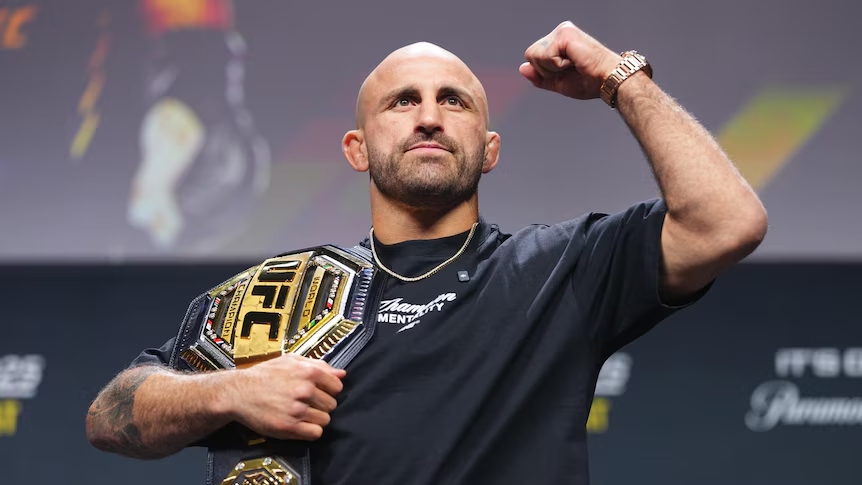
When you think about Australian MMA on the world stage, one name towers above the rest like a giant eucalyptus tree – Alexander Volkanovski. The featherweight champion hasn’t just won fights; he’s fundamentally changed how the world sees Australian mixed martial arts. Whether you’re a casual fan or someone thinking about stepping into the gym yourself, understanding what Volkanovski’s dominance means goes way beyond just wins and losses.
Let’s be real here – before Volkanovski started his tear through the featherweight division, Australia wasn’t exactly considered an MMA powerhouse. Sure, we had some scrappy fighters, but we weren’t Brazil or the United States in terms of global recognition. Now? Well, things have changed quite a bit, and it’s worth understanding exactly how and why.
The Alexander Volkanovski UFC 325 featherweight champion story isn’t just about one bloke from Windang making it big. It’s about an entire nation’s martial arts culture getting a massive shot in the arm, inspiring gyms across the country and showing young fighters that world-class MMA training doesn’t require moving overseas.
What Makes Alexander Volkanovski’s Featherweight Legacy So Significant
Why the MMA Community Considers Him the Featherweight GOAT
Here’s the thing that gets overlooked in a lot of discussions – there’s strong support within the mixed martial arts community for Volkanovski being the greatest featherweight of all time. While the debate continues and not all experts agree, figures like Daniel Cormier have made compelling cases for Volkanovski’s greatness. This isn’t just Australian bias talking; this is based on his technical dominance, the quality of opposition he’s faced, and how he’s evolved as a fighter.
What sets him apart from other champions isn’t just that he wins, but how he wins. Volkanovski has shown an ability to adapt his game plan mid-fight, switch between striking and grappling seamlessly, and maintain incredible cardio even at the championship level. His performance at UFC 325 perfectly demonstrated this adaptability, recovering from early challenges to dominate with superior fight control and cardio through five rounds. These are the hallmarks of truly elite mixed martial arts training.
- Technical striking that combines boxing fundamentals with creative angles
- Wrestling background that allows him to control where fights take place
- Cardio conditioning that lets him maintain pace for five full rounds
- Fight IQ that adapts to different opponents and situations
How His Success Compares to Historical Featherweight Champions
Now, let’s address the elephant in the room – Jose Aldo. The Brazilian legend held the featherweight title for years and finished more opponents during his reign. Some folks still argue that Aldo’s longer title defense streak and higher finish rate make him the true GOAT of the division.
But here’s where it gets interesting. While Aldo dominated during his era, the level of competition and the evolution of MMA techniques have advanced significantly. Volkanovski has faced a deeper pool of well-rounded opponents, each bringing modern training methods and diverse skill sets to the octagon, though the evidence on this comparison is still emerging.
| Champion | Title Defenses | Notable Wins | Era Impact |
|---|---|---|---|
| Alexander Volkanovski | 5 consecutive | Holloway (3x), Ortega, Mendes | Modern MMA evolution |
| Jose Aldo | 7 consecutive | Faber, Edgar, Mendes | Division establishment |
What Recent Challenges Mean for Volkanovski’s Career Trajectory
Why Quick Turnarounds After Knockouts Raise Concerns
Let’s talk about something that’s been on a lot of people’s minds – fighter safety and recovery time. The MMA community has expressed genuine concern about fighters taking bouts too soon after suffering knockout losses, and this applies to even the best fighters in the world.
Recovery isn't just about physical healing, it's about giving your brain the time it needs to fully reset after trauma. The best fighters in the world still need to respect this process.
When a fighter gets knocked out, regardless of their skill level, there’s a complex healing process that needs to happen. Medical guidance emphasizes that the brain needs time to recover from trauma, avoiding heavy impacts while neurological healing occurs. Reflexes need to be retested, and confidence needs to be rebuilt through proper training. Rushing back too quickly can compound problems rather than solve them.
This isn’t about questioning anyone’s toughness – it’s about understanding that even elite athletes need proper recovery protocols. Smart training means knowing when to push and when to pull back, something that applies whether you’re a world champion or someone just starting their martial arts journey.
How Rising Contenders Like Ilia Topuria Factor Into Legacy Discussions
The featherweight division hasn’t stood still while Volkanovski has been champion. New threats have emerged, each bringing their own style and approach to the game. However, there’s an important distinction between being a current threat and having historical greatness.
Beating established champions once doesn’t automatically transfer their legacy to the victor. Greatness in MMA is built over time through consistent performance against diverse opposition, as evidenced by Volkanovski’s sustained excellence through multiple title defenses and victories over varied high-level opponents. While newer fighters might have impressive wins, they need to prove they can maintain that level over multiple fights and different challenges.
- Current performance versus career body of work
- Quality of opposition over time
- Ability to adapt and evolve with the sport
- Impact on the division and sport overall
How Volkanovski’s Success Elevates Australian MMA Training Standards
What His Technical Approach Shows About Modern MMA Training
Here’s where things get really interesting for anyone training in Australia or thinking about starting. Volkanovski’s success hasn’t happened in isolation – it’s the result of world-class training methods that are now being implemented in gyms across the country.
His approach combines traditional martial arts disciplines with modern sports science, something that reflects the comprehensive benefits of mixed martial arts training. This isn’t just about learning to throw punches and kicks; it’s about developing complete athletic and mental capabilities.
The technical aspects that make Volkanovski successful are the same fundamentals that benefit every MMA practitioner, regardless of their goals. Whether you’re training for fitness, self-defense, or competition, the principles remain consistent.
Why His Mental Approach Sets a New Standard
What really separates elite fighters from the pack isn’t just physical ability – it’s mental resilience and strategic thinking. Volkanovski has shown an ability to stay calm under pressure, adapt to changing circumstances, and maintain focus throughout long, grueling fights.
This mental approach is something that can be developed through proper training, regardless of natural talent. Elite fighters understand that mental preparation is just as important as physical conditioning, as demonstrated when Volkanovski’s coach noted his distinct shift in mental state and return of ‘mental fortitude’ despite physical training compromises. The same mindset that helps someone become a world champion can help regular people overcome challenges in their daily lives. It’s about building confidence through competence, one training session at a time.
The discipline required to reach championship level doesn’t happen overnight. Research shows that elite performance like Volkanovski’s is built through consistent training over years, proper coaching, and a supportive environment that challenges you while keeping you safe.
What This Means for Australian Fighters and Training Programs
How World-Class Success Creates Opportunities for Local Athletes
Volkanovski’s success has created a ripple effect throughout the Australian MMA scene. Young fighters now have a clear example that world-class training and achievement are possible without leaving the country, though we’re still seeing how this develops in practice. This has led to increased investment in training facilities, coaching education, and athlete development programs.
The success stories emerging from Australian gyms, like those highlighted in profiles of top local athletes, show that the infrastructure for developing high-level fighters is continuously improving. This benefits everyone from professional athletes to recreational practitioners.
Local gyms are now implementing training methods that were once only available to professional fighters. This democratization of high-level instruction means that anyone walking into a quality MMA gym can access techniques and training principles used by world champions.
Why Quality Coaching Has Become More Important Than Ever
With increased interest in MMA training comes the need for qualified, experienced coaching. The success of fighters like Volkanovski highlights the importance of proper instruction, not just in technique but in safety, progression, and long-term development.
Quality coaching means understanding how to develop fighters safely and systematically. Industry standards indicate that experienced coaches focus on proper technique instruction, gradual progression, and establishing safe training environments. This includes knowing when to push students and when to focus on recovery, how to build skills progressively, and how to create an environment where everyone can improve regardless of their starting point.
- Technical instruction across multiple disciplines
- Safety-first approach to contact training
- Individual progression tracking and goal setting
- Mental resilience and confidence building
What Peak vs Career Achievement Debates Teach Us About MMA Legacy
Why Context Matters When Evaluating Fighter Greatness
The ongoing discussions about featherweight greatness reveal something important about how we evaluate achievement in mixed martial arts. There’s a meaningful difference between peak performance and career accomplishment, as sports analysis consistently recognizes, and understanding this distinction helps us appreciate different types of excellence.
Peak performance might be about that one perfect fight or moment of dominance. Career accomplishment is about sustained excellence over time, facing diverse challenges, and contributing to the sport’s evolution. Both perspectives have merit, and both teach us something about what it takes to excel in martial arts.
This applies whether you’re discussing world champions or your own personal training journey. Sometimes you’ll have breakthrough moments that feel like peak performance. Other times, success is about showing up consistently and making gradual improvements over months and years.
How Modern Training Methods Change Historical Comparisons
The evolution of MMA training has been dramatic over the past decade. Modern fighters have access to sports science, nutrition guidance, recovery protocols, and technical instruction that simply wasn’t available to earlier generations. This makes direct comparisons challenging but also exciting.
What this means for current practitioners is that the training methods available today are more sophisticated and effective than ever before. The same principles that help create world champions are accessible to anyone committed to learning and improving.
The key is finding instruction that incorporates these modern approaches while maintaining the fundamental principles that make martial arts effective. This includes understanding the interviews and perspectives shared by local fighters pursuing professional goals, which demonstrate the dedication required at every level.
What the Evidence Shows About Champion-Level Training
Research consistently supports several key principles that make elite fighters like Volkanovski successful:
- Systematic skill development works: Evidence shows that gradual progression under expert guidance creates lasting improvement without unnecessary injury risk.
- Mental preparation matters as much as physical training: Studies have found that psychological resilience and pressure management are crucial components of elite performance.
- Recovery protocols are non-negotiable: The evidence is clear that proper rest and rehabilitation after training stress or injury prevents long-term problems.
- Quality coaching makes the difference: While training methods vary, experts agree that safety-focused, systematic instruction is essential for development.
- Individual progression varies: Not all studies agree on optimal timelines, but the evidence consistently shows that respecting individual development rates produces better outcomes.
How to Apply Champion-Level Principles to Your Own Training Journey
What Beginning MMA Students Can Learn from Elite Performance
You don’t need to be planning a professional fighting career to benefit from understanding what makes elite fighters successful. The principles that create champions – consistency, technical focus, mental resilience, and proper recovery – are the same ones that help recreational practitioners achieve their goals.
The training approach that develops world-class fighters emphasizes gradual skill building, proper technique over power, and understanding the ‘why’ behind each movement. This methodical approach prevents injuries and creates lasting improvement rather than quick fixes.
Whether your goals involve fitness, self-defense, or competition, the path involves the same commitment to learning and improvement. The difference between levels isn’t usually talent – it’s consistency and quality of instruction.
Why Mental Preparation Matters as Much as Physical Training
Elite fighters understand that mental preparation is just as important as physical conditioning. This includes visualization, stress management under pressure, and maintaining focus during challenging situations. These skills translate directly to everyday life challenges.
Training your mind to stay calm under pressure, whether in sparring or dealing with workplace stress, requires practice and proper guidance. The controlled environment of martial arts training provides an excellent laboratory for developing these capabilities.
How Proper Progression Prevents Injuries and Builds Real Skills
One thing that separates successful long-term practitioners from those who burn out or get injured is understanding proper progression. Elite fighters didn’t start with championship-level intensity – they built up systematically over years of training.
This means focusing on technique before power, understanding before application, and safety before showmanship. Real martial arts development is more like learning a musical instrument than playing a video game – it requires patience, practice, and proper guidance.
The training methods used to develop fighters like Volkanovski emphasize building a strong foundation before advancing to more complex or intense training. This approach, available through comprehensive MMA training programs, ensures that students develop real skills safely and effectively.
What Comes Next for Australian MMA and Training Opportunities
How Success Creates More Opportunities for Everyone
Volkanovski’s achievements have created a positive feedback loop for Australian MMA. Success at the highest level attracts more attention, more resources, and more opportunities for athletes at every level. This benefits not just professional fighters but anyone interested in martial arts training.
The increased visibility of Australian MMA has led to better training facilities, more qualified instructors, and greater acceptance of martial arts as both sport and fitness activity, though we’re still seeing how these changes develop across the country. This makes it easier than ever for newcomers to find quality instruction and supportive training environments.
For those in Melbourne and surrounding areas, this means access to world-class MMA training opportunities that incorporate the same principles used to develop championship-level fighters.
Why Now Is an Excellent Time to Start Training
The current state of Australian MMA provides unprecedented opportunities for new practitioners. The combination of proven training methods, qualified instruction, and supportive communities means that anyone can begin their martial arts journey with confidence.
Whether your goals involve fitness, self-defense, stress relief, or personal challenge, the infrastructure exists to support your development safely and effectively. The key is taking that first step and committing to consistent training.
Extreme MMA provides the perfect environment to experience what world-class martial arts training feels like, with programs designed for every skill level and goal. The 30-day free trial allows newcomers to experience the transformative power of proper MMA instruction without commitment pressure.
Key Takeaways About Volkanovski’s Impact and Your Training Journey
Alexander Volkanovski’s dominance as featherweight champion represents more than individual achievement – it’s proof that Australian MMA has reached world-class status. His technical excellence, mental resilience, and professional approach provide a blueprint that benefits practitioners at every level.
The principles that make elite fighters successful – consistency, proper technique, mental preparation, and quality coaching – are the same ones that help recreational practitioners achieve their personal goals. You don’t need championship ambitions to benefit from champion-level training methods.
The current state of Australian MMA provides excellent opportunities for anyone interested in beginning their martial arts journey. Quality instruction, modern training methods, and supportive environments make it possible for people of all backgrounds to experience the benefits of mixed martial arts training safely and effectively.
Whether you’re inspired by Volkanovski’s success or simply looking for a challenging and rewarding fitness activity, the door is open. The question isn’t whether you have what it takes – it’s whether you’re ready to take that first step and discover what you’re capable of achieving.
About the Author

Lachlan James
Marketing Coordinator at Extreme MMA
Lachlan James is the Marketing Coordinator at Extreme MMA, responsible for creating engaging content and building the brand’s online presence. With a passion for mixed martial arts and digital marketing, Lachlan combines his knowledge of the sport with strategic marketing expertise to help grow the Extreme MMA community. He works closely with coaches and fighters to share their stories and expertise with both current members and aspiring martial artists.
When he’s not creating content or managing social media campaigns, Lachlan can be found training at the gym, always looking to improve his own skills while gaining deeper insights into what makes Extreme MMA special.
When he's not creating content or managing social media campaigns, Lachlan can be found training at the gym, always looking to improve his own skills while gaining deeper insights into what makes Extreme MMA special.